🌿 Waste to Wealth: Transforming Waste into Opportunity
In a world facing growing environmental challenges, waste is no longer just a problem — it is an untapped resource. The “Waste to Wealth” model focuses on converting household and community waste into valuable, marketable products while creating green jobs and strengthening local economies.
🌎 Why Waste to Wealth Matters
The Waste to Wealth approach promotes:
♻️ Circular economy practices
🌱 Environmental protection
💼 Green job creation
🏘️ Community resilience
💰 Increased household income
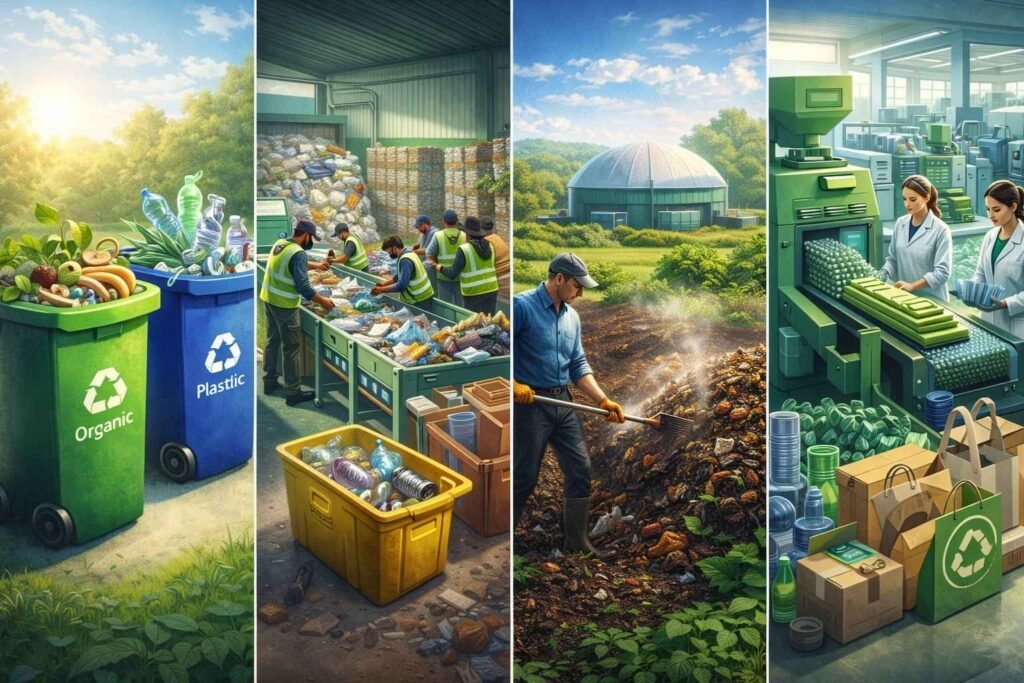
1️⃣ Waste Segregation at Source
Households separate waste into categories such as organic, recyclable, and non-recyclable materials. Proper sorting is the foundation of an efficient circular system.
2️⃣ Collection & Processing
Collected waste is transported to local processing hubs where:
- Organic waste is converted into compost or biogas
- Plastic and recyclable materials are cleaned and reprocessed
- Recovered materials are turned into new market-ready products
3️⃣ Product Development & Sales
Processed materials are transformed into valuable goods such as:
-
Organic fertilizer for agriculture
-
Recycled plastic products
-
Eco-friendly packaging materials
-
Renewable energy from organic waste
These products are then distributed to local and international markets, creating sustainable revenue streams.
🌟 Social & Economic Impact
The Waste to Wealth initiative goes beyond environmental benefits. It directly improves livelihoods by:
-
Empowering low-income families with income-generating activities
-
Supporting women and youth employment
-
Reducing community health risks
-
Strengthening local entrepreneurship
By linking families to structured waste value chains, communities can reduce pollution while increasing their income levels.
🌍 Supporting Sustainable Development Goals (SDGs)
Waste to Wealth contributes to multiple SDGs including:
-
Responsible Consumption & Production
-
Climate Action
-
Decent Work & Economic Growth
-
Sustainable Cities & Communities
🚀 The Vision
Our vision is to build safe, resilient, and sustainable communities where waste is no longer seen as garbage but as a resource for economic growth and environmental protection.
Through innovation, community engagement, and market integration, we are transforming waste into wealth — creating a cleaner planet and a stronger economy for future generations.